Human Rights and Climate Change
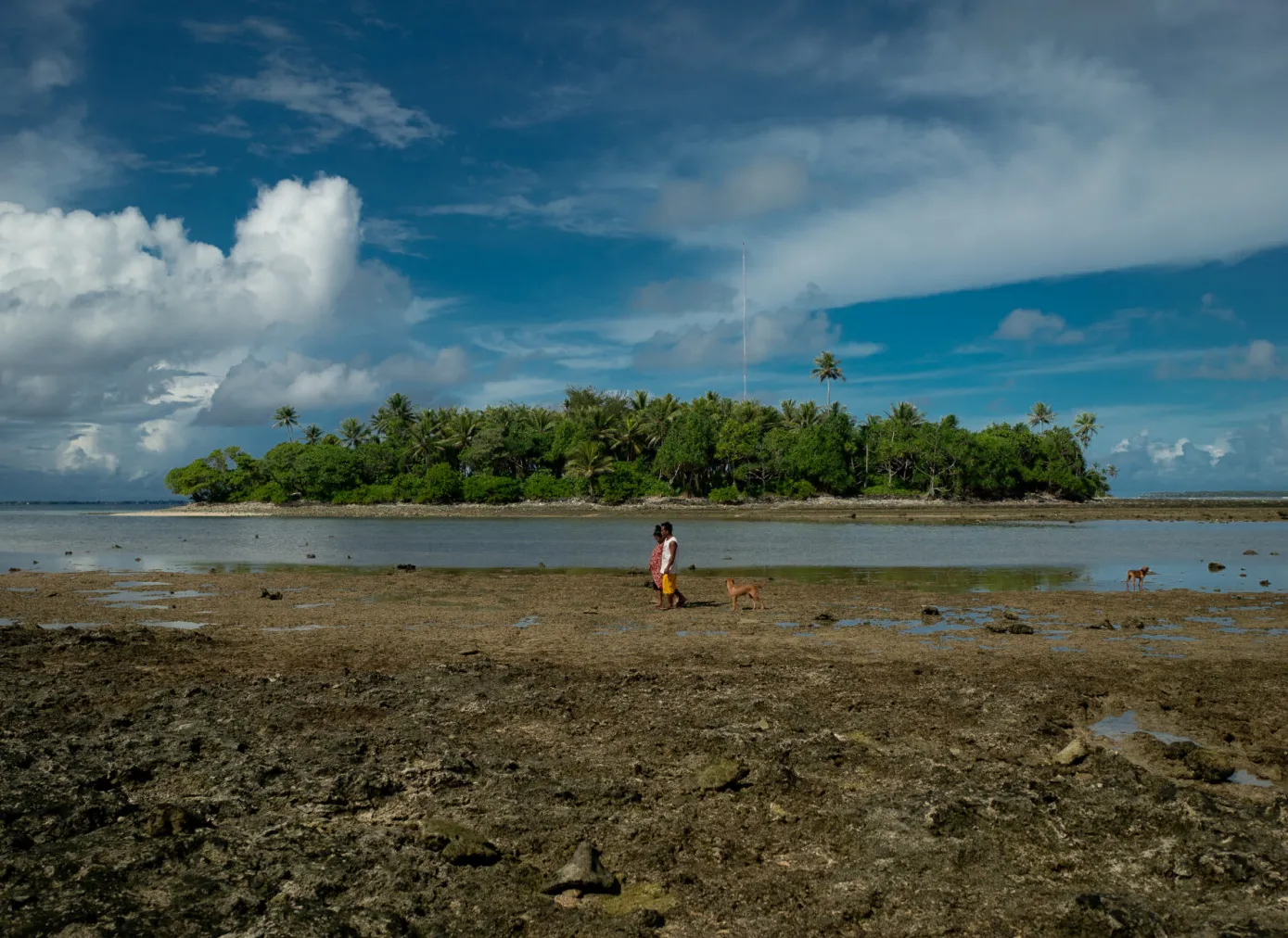
Climate change poses a very real threat to the enjoyment of human rights. Sea level rise, heat waves, floods, droughts, and other climate impacts can cause death and injury, displace people from their homes, undermine food and water security, and otherwise interfere with the lives, health, and well-being of millions of people. These harms often fall disproportionately on communities that are already vulnerable, including Indigenous peoples, children and youth, small island populations, and other groups facing structural inequalities. The Sabin Center’s research explores how international human rights law can help address these challenges across the full spectrum of climate governance, including strengthening mitigation ambition, supporting adaptation measures that protect affected communities, and informing approaches to loss and damage and remedies for climate-related harm.
Legal Tools & Projects
Consultation on the Committee on the Rights of the Child’s General Comment on Children’s Rights and Climate Change (2022, Sabin Center):
The Sabin Center was invited to co-host the consultation on the right of the children and climate change to inform the General Comment on Children’s Rights and the Environment with a Special Focus on Climate Change (General Comment No. 26), along with Terre des Hommes and Child Rights Connect. The consultation was held on February 28, 2022. The Sabin Center prepared an annotated bibliography and an accompanying list of youth-based climate litigation cases to inform the consultation. Maria Antonia coordinated the drafting of these resources and presented some thoughts on the significance of youth-based climate litigation during the consultation. A blog post with further detail is forthcoming.
Research
Brazil and Climate Justice: Pioneering Climate Litigation for a Global Cause (Brill½Nijhoff, 2025) (Maria Antonia Tigre, Armando Rocha & Délton Winter de Carvalho eds.)
The Role of Advisory Opinions in International Law in the Context of the Climate Crisis (Brill½Nijhoff, forthcoming 2025) (Maria Antonia Tigre & Armando Rocha eds.)
Climate Litigation and Vulnerabilities: Global South Perspectives (Routledge, 2025) (Maria Antonia Tigre, Melanie Murcott & Susan Ann Samuels eds.)
The Transformation of European Climate Litigation, (Verfassungsbooks, 2024) (Maxim Bönnemann & Maria Antonia Tigre eds.
Maria Antonia Tigre, Chapter 13, “The Rights of Access to Justice,” in Climate Justice and Human Rights: Legal Standards and Tools from the Inter-American Court’s Advisory Opinion 32/25 (IACtHR & Open Society Justice Initiative, 2025)
Maria Antonia Tigre & Thalia Viveros-Uechara, The Inter-American Human Rights Systems and Climate Litigation, in Climate Change Before International Courts: A Comparative Study (Carla Amado Gomes, Heloísa Oliveira, Armando Rocha & Matteo Fermeglia eds., Routledge 2025).
Maria Antonia Tigre & Katherine Quinn, Trends in Human Rights Law-Making: the Implications of ‘Norming’ Climate Climate Rights, Human Rights and Investment Law for Climate Change (B. Martinez Romera et al., eds., Edward Elgar, 2025)
Melanie Jean Murcott, Maria Antonia Tigre & Susan Ann Samuel, Introduction: Linking Global South Vulnerability, Intersectionality, and Climate Litigation, in Climate Litigation and Vulnerabilities: Global South Perspectives (Maria Antonia Tigre, Melanie Jean Murcott & Susan Ann Samuel eds., 2025) (Routledge).
Maria Antonia Tigre, Melanie Jean Murcott & Susan Ann Samuel, Conclusion: Key Lessons and a Future Research Agenda for Climate Litigation and Vulnerabilities, in Climate Litigation and Vulnerabilities: Global South Perspectives (Maria Antonia Tigre, Melanie Jean Murcott & Susan Ann Samuel eds., 2025) (Routledge).
The ICJ’s Advisory Opinion on Climate Change (Verfassungsbooks, 2024) (Maria Antonia Tigre, Maxim Bönnemann & Antoine De Spiegeler eds.)
Lea Main-Klingst, Hermann E. Ott and Maria Antonia Tigre, Beyond Protest: How Legal Actions Drive Climate Justice, Routledge Handbook on Global Climate Activism (S. von Mering, T. Bell, A. da Silva Faustino, W. Steele, A. Ward and M. Arjona Soberón, eds., Routledge, 2024)
Maria Antonia Tigre, The Right to a Healthy Environment in Latin America and the Caribbean: Compliance through the Inter-American System and the Escazú Agreement, International Courts versus Non-compliance Mechanism (C. Voigt and C. Foster, ed., Cambridge University Press, 2024)
Erin Daly, Maria Antonia Tigre, and Natalia Urzola, Common but differentiated constitutionalisms: Does ‘environmental constitutionalism’ offer realistic policy options for improving UN environmental law and governance? US and Latin American perspectives, 172 Constitutionalism, Transnational Governance Failures And Policy Responses (E.-Ulrich Petersmann and A. Steinbach, ed., Brill/Nijhoff, 2024
Maria Antonia Tigre and Joana Setzer, Human Rights and Climate Change for Climate Litigation in Brazil and Beyond: An Analysis of the Climate Fund Decision, 54(4) Georgetown Journal of International Law 593 (2023)
Maria Antonia Tigre, International Recognition of the Right to a Healthy Environment: What is the Added Value for Latin America and the Caribbean?, Am. J. of Int’l L. Unbound (2023)
Maria Antonia Tigre and Margaretha Wewerinke-Singh, Beyond the North-South divide: Litigation’s role in resolving climate change loss and damage claims, 32(3) Rev. of Eur., Comp. and Int’l Env’t L. 439-452 (Special Issue: Emerging Issues in Loss and Damage for Vulnerable States) (2023)
Melanie Murcott, Maria Antonia Tigre and Nessa Zimmerman, Transnational Insights for Climate Litigation at the European Court of Human Rights: A South-North Perspective in Pursuit of Climate Justice, 56 VRÜ | WCL 299 (2023)
Maria Antonia Tigre, Climate Change and Indigenous Groups: The Rise of Indigenous Voices in Climate Litigation, 9(3) E-Publica 214 (2022)
Maria Antonia Tigre, Exploring the Bedrock of Earth Jurisprudence, 22 Rutgers Journal of Law & Religion 223-313 (2022)
Maria Antonia Tigre, Natalia Urzola and Victoria Lichet, Reframing Global Biodiversity Protection after COVID-19: Is International Environmental Law up to the task?, 23 Vermont Envt. L. J. 123 (2022)
Maria Antonia Tigre, International Environmental Law in National/Regional Courts (South America, Chapter 67), Oxford Handbook of International Environmental Law (L. Rajamani and J. Peel, eds., Oxford University Press) (2021)
Maria Antonia Tigre et al., Environmental Protection and Human Rights in the Pandemic, 1(1-2-3) Legal Policy & Pandemics: the Journal of the Global Pandemic Network 317 (2021)
Maria Antonia Tigre, COVID-19 and Amazonia: Right-based approaches for the pandemic response, 30(2) Rev. of Eur., Comp. and Int’l Env’t L. 162 (2021)
Maria Antonia Tigre and Natalia Urzola, The 2017 Inter-American Court’s Advisory Opinion: changing the paradigm for international environmental law in the Anthropocene, 12(1) J. Hum. Rts. & Envt. 24 (2021)
Maria Antonia Tigre and Sarah C. Slinger, A Voice in the Development of Amazonia: The Constitutional Rights to Participation of Indigenous Peoples, Indigenous Amazonia, Regional Development and Territorial Dynamics: Contentious Issues (I.B. de Lima et al., eds., Springer, 2020)
Maria Antonia Tigre, Gaps in International Environmental Law: Toward a Global Pact for the Environment (ELI Press, 2020)
Maria Antonia Tigre and Victoria Lichet, Update on Negotiation of a New International Environmental Agreement, 50(10) Envtl. L. Rep. 10818 (2020)
Maria Antonia Tigre, Implementing Constitutional Environmental Rights in the Amazon Rainforest, Implementing Environmental Constitutionalism: Current Global Challenges (E. Daly and J. May, eds., Cambridge University Press, 2019)
Human Rights and Article 6 of the Paris Agreement: Ensuring Adequate Protection of Human Rights in the SDM and ITMO Frameworks, Romany Webb and Jessica Wentz (May 2018)
Maria Antonia Tigre, Regional Cooperation in Amazonia: A Comparative Environmental Law Analysis (Brill½Nijhoff, 2017)
Sadly, The Paris Agreement Isn’t Nearly Enough, Michael Gerrard (September 2016)
Climate Change and Human Trafficking After the Paris Climate Agreement, Michael Gerrard (June 2016)
This is a transcript of a presentation delivered at the Judges’ Summit on Human Trafficking and Organized Crime Pontifical Academy of Social Sciences. It discusses how climate change will affect displacement and human trafficking and the extent to which the Paris Agreement will address these key problems.
Climate Change and Human Rights, Michael Burger and Jessica Wentz (UNEP, December 2015)
Designing a Climate Change Displacement Coordination Facility: Key Issues for COP 21, Jessica Wentz and Michael Burger (September 2015)
In the lead up to COP 21, there were several proposals to include provisions for the creation of a “climate change displacement coordination facility” in the Paris Agreement. This briefing note highlights some of the functions that the displacement coordination facility could fulfill, as well as some key questions for negotiators in the lead-up to COP 21 and subsequent talks. The note is not intended to be a proposal for how the facility should operate, nor do the functions highlighted below necessarily reflect what is politically or economically feasible. Rather, the note is intended to outline a broad array of considerations for decision-makers as they contemplate whether and how to proceed with the displacement coordination facility.
Engagement
Amicus Brief submitted by the Sabin Center for Climate Change Law on Climate Science and Human Rights Obligations to the African Court of Human and Peoples’ Rights on the Request for an Advisory Opinion on the Obligations of States with Respect to the Climate Change Crisis (February 2026) by Jessica Wentz, Michael Burger and Maria Antonia Tigre
Amicus Brief submitted by the Sabin Center for Climate Change Law on Climate Science and Human Rights Obligations to the Inter-American Court of Human Rights on the Request for an Advisory Opinion on the Climate Emergency and Human Rights from the Republic of Colombia and the Republic of Chile (November 2023) by Jessica Wentz, Michael Burger, Maria Antonia Tigre and Michael Gerrard
Third Party Intervention by the Sabin Center for Climate Change Law in the Klimaseniorinnen v. Switzerland Case before the European Court of Human Rights (December 2022) by Michael Burger and Maria Antonia Tigre
2015-2020
Submission to the UN Secretary General High-Level Panel on Internal Displacement in the Context of Disasters And the Adverse Effects of Climate Change (submitted on May 8, 2020)
In 2016, the Sabin Center submitted a letter to the UNFCCC secretariat requesting that human rights safeguards be incorporated into the Sustainable Development Mechanism created under Article 6 of the Paris Agreement.
Submission to Philippines Carbon Majors Investigation by Michael Burger and Jessica Wentz (December 2016)
Written Statement of Michael H. Burger, Executive Director, on Climate Change and Human Rights, UPR Civil Society Consultation (February, 2015)
Protecting the Human Rights of Persons Displaced by Climate Change, submitted to the U.S. Department of State in advance of the 2nd UPR (May 2015)
Advance Written Statement of Michael H. Burger, Executive Director, on Climate Change and Human Rights, UPR Town Hall & Civil Society Consultation (July, 2015)